Product Introduction

Granulated Sulphur

High-purity granulated (formed) sulphur, supplied in bulk or in bags to fertilizer producers, sulphuric acid plants, metal processors, chemical manufacturers and importers. Sulphur is the raw material behind phosphate fertilizer and sulphuric acid, two of the most widely used industrial chemicals. We supply to an agreed specification, inspected by an independent surveyor at the loading port.

99.5%+typical sulphur purity 2–6 mmgranule size 3packing options 2503HS code (2503.00)

Certificate of analysis per shipment · Specification agreed before shipment · Bulk, jumbo bag or bagged
Granulated Sulphur
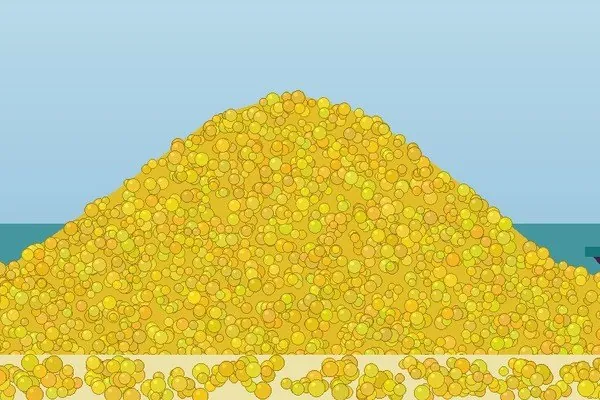
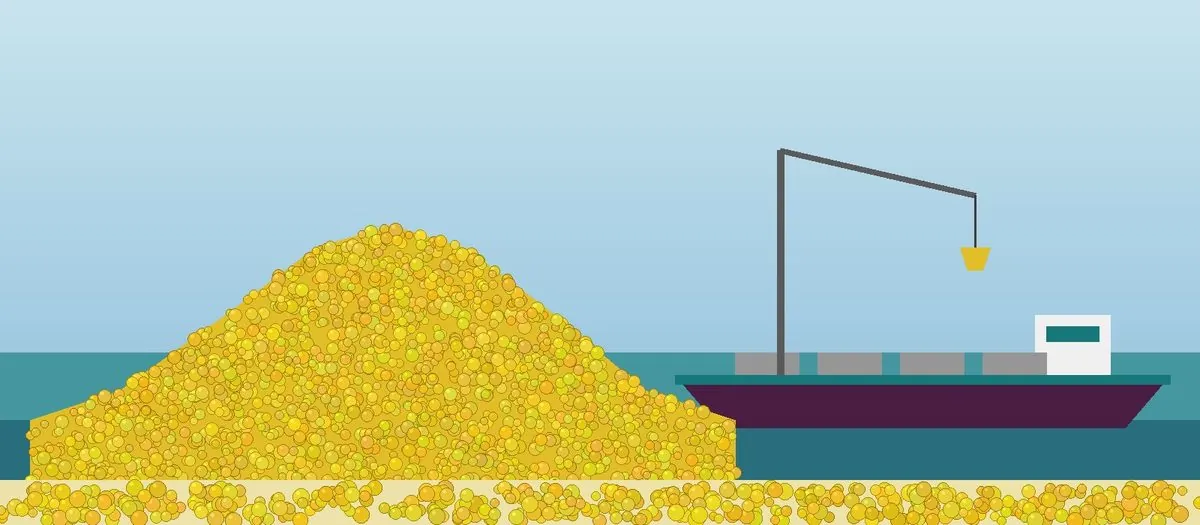
Granulated sulphur stockpile and bulk loading: illustration

The Raw Material Behind Fertilizer and Acid

One element, many industries: a dependable supply for buyers who plan around specification and schedule

Elemental sulphur is a bright yellow, solid, non-metallic element. Most of the world's supply is a by-product of removing sulphur from natural gas and crude oil, recovered in refineries and gas-processing plants, so it is available wherever oil and gas are processed. Molten sulphur from the recovery unit is cooled and formed into granules, which are easy to handle, store and load, and low in dust compared with powder.

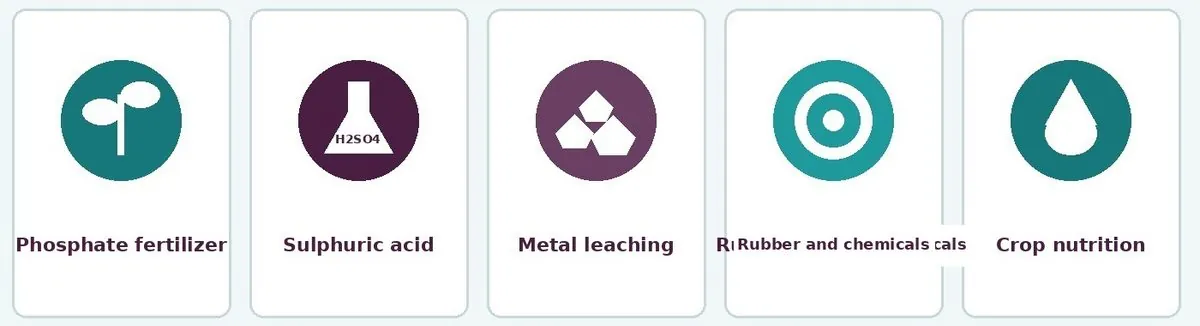
About nine tenths of sulphur is burned to make sulphuric acid, which is used to produce phosphate fertilizer, to leach metals from ore, and in chemicals, batteries, and many other industries. The rest goes to direct agricultural use, rubber, and speciality chemicals.

99.5%+typical purity, higher on request
4physical forms: granulated, prilled, lump, molten
3packing options: bulk, jumbo bag, bag

Why Buyers Choose ATHER Sulphur

Specification first

Sulphur content, moisture, ash, acidity and granule size are agreed in the contract and checked against the loading-port certificate.

Independent inspection

Quality and quantity are inspected by SGS, Bureau Veritas, Intertek or an equivalent agency at the loading port.

Free-flowing granules

Uniform 2 to 6 mm granules that store, convey and discharge well, with limited fines and dust.

Flexible volumes

Container-load and bagged lots, and bulk vessel parcels from small Handysize cargoes up to full Supramax or Panamax loads.

Cargo know-how

Hold preparation, dust control, fire safety and discharge planning are agreed with the carrier before loading.

Documented and compliant

Invoice, bill of lading, certificate of origin, certificate of analysis, safety data sheet, and the export papers the destination requires.

Forms, Grades and Specification
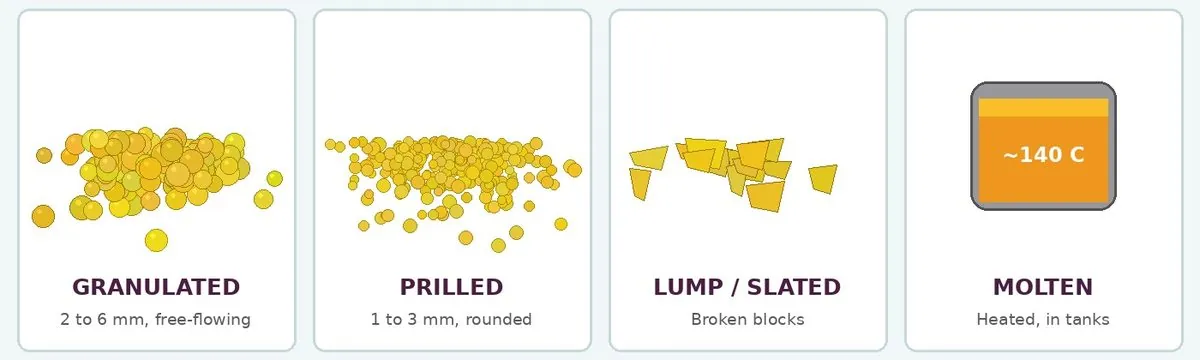
Choose the form and grade that match your process

Commercial forms of sulphur. Illustration only; samples available on request
Form
Description
Handling
Typical user
Granulated (formed)
Hard granules, 2 to 6 mm, cooled from the melt
Bulk, jumbo bag or bag; free-flowing; low dust
Fertilizer, acid and chemical plants; general trading
Prilled
Small rounded beads, 1 to 3 mm
Bulk or bagged; very uniform
Direct application and blending
Lump / slated
Broken blocks or slabs
Bulk; needs crushing before use
Local melting and consumption
Molten
Liquid sulphur at about 140 °C
Heated tanks, rail cars or ships
Plants next to the source

Typical Specification

The ranges below show what we can offer for granulated sulphur. Exact limits are confirmed in the contract and verified by the certificate of analysis for each shipment.

Parameter
Standard grade
Premium grade
Method
Sulphur (S), dry basis
99.5% min
99.9% min
ISO 7247 / ASTM D4239 / agreed method
Moisture
up to 0.5%
up to 0.2%
Gravimetric
Ash
up to 0.2%
up to 0.05%
Gravimetric, 800 °C
Acidity (as H2SO4)
up to 0.02%
up to 0.005%
Titration
Organic matter
up to 0.1%
up to 0.03%
Combustion / agreed method
Granule size
2 to 6 mm
2 to 6 mm
Sieve analysis
Fines (below 1 mm)
up to 3%
up to 2%
Sieve analysis
Appearance
Yellow, solid
Bright yellow, free of foreign matter
Visual

Indicative ranges, not a guarantee. Tighter or different limits can be requested, for example for specific fertilizer or acid plant requirements. The test methods listed are common references; the final method is agreed in the contract. Buyers that import into countries with their own standard (for example China GB/T 2449.1) should state the grade required.

What the Parameters Mean for You

  • Sulphur content: sets acid yield per tonne and the amount of waste. Acid plants and exporters usually require 99.5% or better.
  • Moisture: adds weight you pay for, causes caking and speeds corrosion of steel handling equipment.
  • Ash: non-burnable residue that fouls furnaces and filters and reduces the acid plant's catalyst life.
  • Acidity: free acid corrodes holds, conveyors and storage structures.
  • Organic matter: causes dark colour and carbon deposits in acid production, and can affect catalyst performance.
  • Granule size and fines: govern dust, flow, and the amount lost in handling.

Applications

Where sulphur is used

Where sulphur is used

Main application areas

Application
How sulphur is used
Buyers
Sulphuric acid
Burned to sulphur dioxide, converted to sulphur trioxide and absorbed into acid. The largest use by far.
Acid producers, fertilizer and chemical companies
Phosphate fertilizer
Acid reacts with phosphate rock to make phosphoric acid and phosphate fertilizers such as DAP, MAP, TSP and SSP.
Fertilizer manufacturers
Metal processing
Acid leaches copper, nickel, cobalt, zinc and uranium from ore; also used in smelting by-product recovery.
Mining and metals companies
Sulphur-based fertilizer
Elemental sulphur and sulphur-enhanced products correct sulphur deficiency in soil and improve crop yield and quality.
Blenders, distributors, agri-input companies
Chemicals and rubber
Carbon disulphide, sulphites, thiosulphates, pigments and rubber vulcanisation.
Chemical and rubber manufacturers
Other uses
Pulp and paper, pharmaceuticals, pesticides and fungicides (as fine powder), and many speciality products.
Industrial users

Sulphur demand follows phosphate fertilizer and metals production, so volumes move with agricultural and mining cycles.

Production, Packing and Logistics
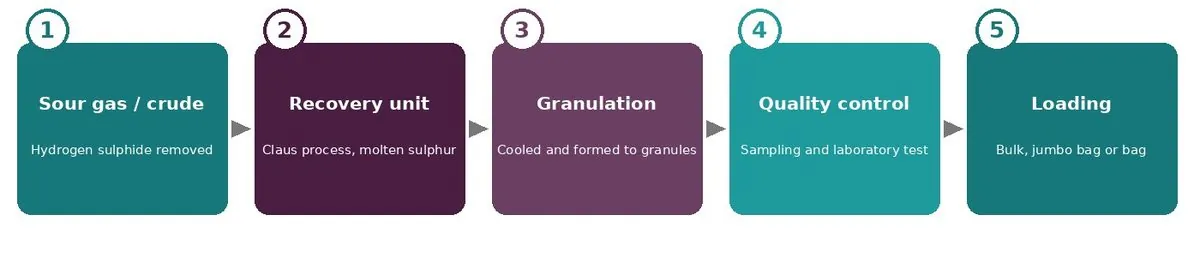
From the recovery plant to your port

Typical production and loading route

Typical production and loading route

Packing options: bulk vessel, 1 MT jumbo bag, 25 kg and 50 kg bags

Item
Detail
Bulk vessel
Handysize to Panamax bulk carriers loaded by grab or conveyor, usually 5,000 MT to 60,000 MT per parcel; the carrier prepares holds clean and dry, and lime-washes them if required
Jumbo bags
1 MT FIBC with waterproof liner, in containers or break-bulk
Bagged
25 kg or 50 kg woven PP bags with liner, palletised and shrink-wrapped; custom printing available
Containers
20 ft: about 25 to 26 MT of bagged or jumbo-bag sulphur, subject to the payload and the carrier's acceptance of the cargo
Loading ports
Chosen for each contract, based on the origin of the cargo and the vessel size and route; named in the offer

Safe Handling and Shipping

Sulphur is a combustible solid and is shipped under the IMSBC Code for solid bulk cargoes, and as UN 1350 (IMDG Class 4.1) when packed. Safe carriage depends on the following points, which we agree with the carrier and the receiving terminal before loading.

Hazard
Control
Fire
Keep away from ignition sources, open flame and hot work. Sulphur burns with a blue flame and produces sulphur dioxide, a toxic gas. Fire plans and water fog or foam are used, not solid water jets.
Dust explosion
Fine sulphur dust in air can explode. Limit dust at loading, discharge and sweeping, avoid static and sparks, and keep dust away from machinery and accommodation.
Corrosion
Wet sulphur forms acid that attacks steel. Holds and equipment are clean and dry; hatch covers watertight; moisture content is declared.
Toxic gas
Hydrogen sulphide and sulphur dioxide can build up in enclosed spaces. Test the atmosphere before entry.
Cleaning
No dry sweeping. Holds are washed with fresh water after discharge and residues disposed of according to local rules.

A shipper's declaration states form, moisture, particle size and hazards before loading.
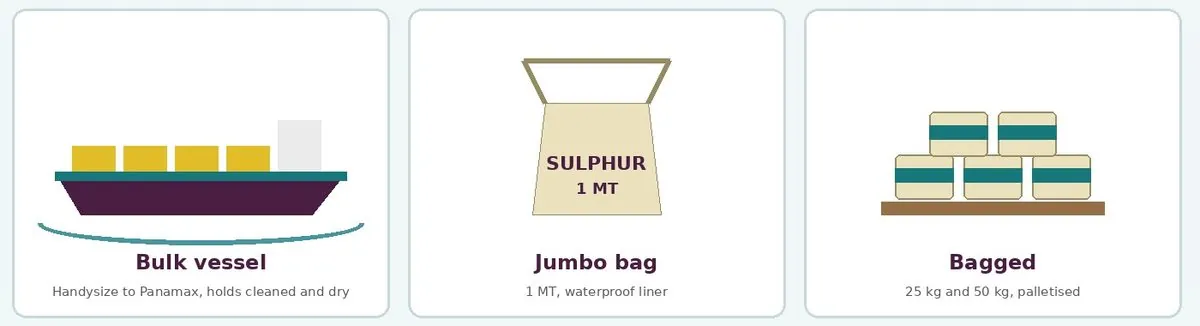
Packing options: bulk vessel, 1 MT jumbo bag, 25 kg and 50 kg bags

Quality, Documents and Commercial Terms

What every shipment includes

Inspection and Certificates

  • Independent quality and quantity inspection at the loading port (SGS, Bureau Veritas, Intertek or equivalent), with a certificate of analysis and a draft survey
  • Sealed retained samples kept for dispute resolution
  • Certificate of origin issued by the competent chamber of commerce
  • Safety data sheet and the shipper's cargo declaration
  • Commercial invoice, bill of lading and insurance certificate (CIF or CIP terms)

Commercial Terms

Item
Terms
Price basis
Quoted per metric ton in USD, linked to the market on the date of the offer. Offers are valid for a short period because sulphur prices move quickly.
Incoterms 2020
FOB, CFR or CIF with the named port; the discharge port is named in the contract.
Payment
For new buyers and large shipments: irrevocable, confirmed documentary letter of credit, payable at sight. For established buyers: telegraphic transfer terms agreed in the contract.
Quantity
Single parcels or monthly programmes; quantity tolerance agreed in the contract (commonly plus or minus 10% in the seller's option for bulk).
Inspection
Loading-port inspection is final for quality and quantity; destination inspection is for information, and any variance is settled afterwards.
Import permits
The buyer holds the import licences, hazardous-chemical registrations and port approvals required in the destination country.
HS code
2503.00 (sulphur of all kinds, other than sublimed, precipitated and colloidal sulphur).

Market Notes for Buyers

  • By-product supply: sulphur output follows oil and gas processing, so supply does not respond quickly to price. This makes sulphur prices volatile.
  • Demand drivers: phosphate fertilizer production and metals leaching are the main sources of demand, so prices follow those sectors and freight.
  • Planning: buyers with ongoing needs benefit from monthly programmes and price review clauses, which spread price risk between buyer and seller.
  • Trade rules: export licences, transit rules and sanctions can affect where a cargo can load. We confirm the legal route before any offer is accepted.

Ordering and About ATHER

Send us your requirement

Tell us the application, the specification and the volume you need. We confirm grade, packing and shipping terms and reply with an offer, with samples available on request.

To Receive a Quotation, Please Provide

  • Application and required grade (sulphur content, moisture, ash and acidity limits)
  • Form and size: granulated, prilled, lump
  • Quantity, number of shipments and packing (bulk, jumbo bag or bag)
  • Preferred Incoterm, destination port and delivery period
  • Company name, country and contact details, with the required import permits

How We Work

Step
What happens
Timing
1
Enquiry with specification and volume
Day 0
2
Offer with price, terms and validity
Within 48 hours
3
Contract and payment instrument (letter of credit or agreed terms)
After acceptance
4
Vessel nominated, loading and independent inspection
Per contract schedule
5
Documents presented, payment received, original documents released
After loading

Images are illustrations, not photographs of a specific shipment. Specifications and grade tables are indicative and are confirmed in the contract. Product is supplied to the agreed specification and verified by independent inspection at the loading port.

Quick Answers

Frequently Asked Questions

What does ATHER for Trade supply under Granulated Sulphur?

High-purity granulated (formed) sulphur, supplied in bulk or in bags to fertilizer producers, sulphuric acid plants, metal processors, chemical manufacturers and importers. Sulphur is the raw material behind phosphate fertilizer and sulphuric acid, two of the most widely used industrial chemicals. We supply to an agreed specification, inspected by an independent surveyor at the loading port.

What are the key figures for Granulated Sulphur?

99.5%+ typical sulphur purity; 2–6 mm granule size; 3 packing options; 2503 HS code (2503.00)

How can I request a quotation for Granulated Sulphur?

Send the product, specification, quantity and destination port through the contact page. ATHER quotes to the project specification and ships with the quality documentation your buyer requires.

Where is Granulated Sulphur supplied from?

It is supplied from Egypt by ATHER for Trade, a Cairo-based trading and export company working with Egyptian manufacturers, with export shipping documentation for importers and distributors.